Filtered by Oral Health Goal
You're in the dentist's chair, mouth wide open, when your dentist asks, "Have you been flossing?" You nod — but your inflamed gums and the debris wedged between your teeth tell a different story. Did you know that brushing alone only cleans about 60% of your tooth's surface? That leaves a significant 40% of plaque and bacteria hiding in the tight gaps where your toothbrush bristles simply cannot reach.1
To protect your gums and truly clean your mouth, you need to go further — but that raises a big question: should you rely on dental floss, commonly called teeth floss, an interdental brush, or a combination of both? This article breaks down the key differences so you can make an informed choice for your daily routine, with a little help from DARLIE's range of advanced oral care tools.
Understanding Interdental Cleaning Tools
What Is Dental Floss?
Dental floss is the interdental tool most of us grew up with. It is a thin thread, typically made from nylon or PTFE (polytetrafluoroethylene), designed to slide between the tight contact points of your teeth and scrape away plaque and food debris that your toothbrush misses. Traditional teeth floss comes in a variety of forms — waxed, unwaxed, and flavoured — to suit different teeth spacing and personal preferences.
What Is an Interdental Brush?
An interdental brush, also known as an interproximal brush or interdental floss alternative, is a small brush fitted with a thin, flexible wire core coated in soft bristles.2 It is used to clean between the teeth in the same spaces that floss reaches, but with a scrubbing action rather than a scraping one. Interdental brushes come in a range of sizes — from very fine to slightly wider — so you can find the right fit for the varying gaps around your mouth.

Interdental Brush vs Floss:
A Comparative Analysis
Cleaning Efficiency
Both tools are effective when used correctly, but they perform differently depending on the space they have to work in. Research suggests that for teeth with larger gaps, an interdental brush vs floss comparison generally favours the brush, as its bristles can fill the entire interproximal space and clean both adjacent tooth surfaces simultaneously.2 For very tight contact points where a brush cannot fit, dental floss remains the superior tool, using its thin thread to scrape plaque from tooth surfaces the brush cannot access.
Ease of Use
Many people find interdental brushes more intuitive to handle than traditional floss. Wrapping floss around your fingers and manoeuvring it to the back of your mouth can be tricky, particularly for those with limited dexterity. The small handle of an interdental brush offers a more natural grip, making the cleaning motion feel more controlled and less awkward for many users.
Suitability for Different Gap Sizes
This is arguably the most important factor when choosing between the two. Dental floss is best suited to teeth with tight contacts where nothing else can fit through. Interdental brushes, on the other hand, are particularly well suited to:
Practical Tips for Effective Use
Proper Technique for Using Dental Floss
Using teeth floss correctly makes a significant difference to how effectively it removes plaque. Follow these steps:
Proper Technique for Using Interdental Brushes
Choosing the right brush size and using it correctly maximises your cleaning results:

The "No-Floss" Fix: Maximum Reach Without the Hassle
When Interdental Tools Aren't Available
If you are travelling, just getting started with interdental cleaning, or simply haven't yet gotten used to the habit, skipping it entirely still carries a real cost. When plaque is left to accumulate between teeth, it can harden into tartar, creating conditions that may lead to gum inflammation and other dental issues.1 It is a step worth building into your routine, even if you start small.

The Solution
A practical bridge while you build the habit is to switch to a toothbrush engineered to mimic some of that interdental action — one with ultra-flexible bristles and slim, tapered tips designed to slide deeper into the gaps between your teeth and along the gumline, sweeping away debris that standard brushes miss.

Recommended DARLIE Tools (Especially for People with Non-Straight Teeth)
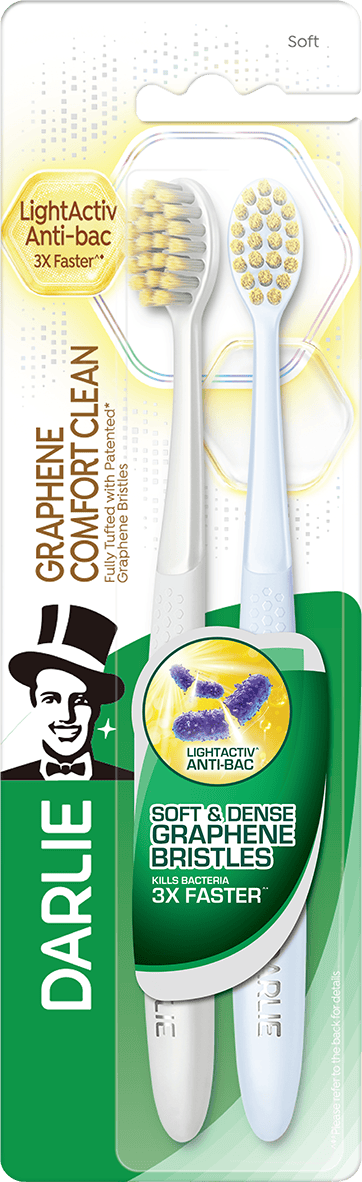
DARLIE Graphene Comfort Clean Toothbrush
For those seeking a gentle yet thorough brushing experience, the DARLIE Graphene Comfort Clean Anti-bacterial Toothbrush is an excellent choice for supporting your interdental routine. Designed with 3X more bristles that are ultra-soft and dense, it provides high-density plush bristle coverage that reaches effectively into the gaps between your teeth for gentle gum care without sacrificing cleaning reach. As a bonus, the toothbrush features LightActiv Graphene Bristles that kills 99% of bacteria 3X faster when exposed to light, giving your mouth a hygiene head start even before you pick up your floss or interdental brush.

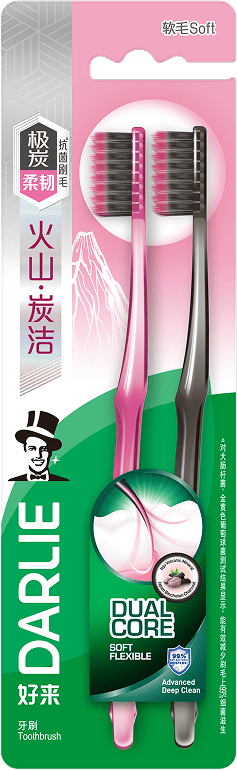
DARLIE Volcanic Charcoal Toothbrush
Designed for those with narrow tooth gaps or those who want maximum reach along the gumline, the DARLIE Volcanic Charcoal Anti-bacterial Toothbrush uses core-in-core dual-layered bristles with a strong root and 0.01mm slim tip bristles 3 to reach effectively and gently between teeth gaps and along gum lines. The inner bristle core is infused with volcanic mineral from the island of Jeju, Korea, while the outer core is layered with Binchotan Charcoal from Japan — a combination that helps to inhibit bacteria formation on the bristles 4 and remove hidden food residues from hard-to-reach areas.

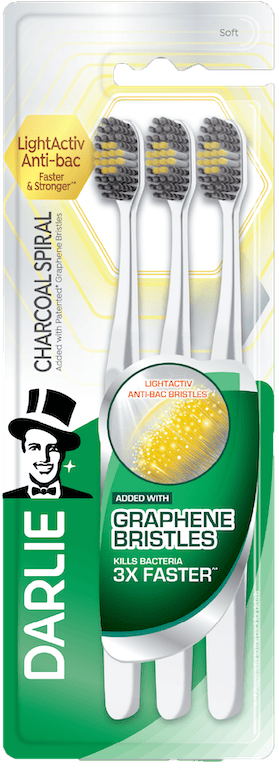
DARLIE Charcoal Spiral Graphene Toothbrush
For superior plaque removal power, the DARLIE Charcoal Spiral Graphene Anti-bacterial Toothbrush utilises advanced Charcoal-and-Graphene bristle technology. Its hexagonal cross-section Charcoal Spiral Bristles deliver 4 times the cleansing power 5 compared to normal tapered filaments, while 0.01mm tapered bristles reach deeper between teeth to help keep your breath fresh and your mouth more thoroughly clean.

The Dynamic Pair: NEW DARLIE Double Action Fresh Protect 2in1 Mouthwash Toothpaste
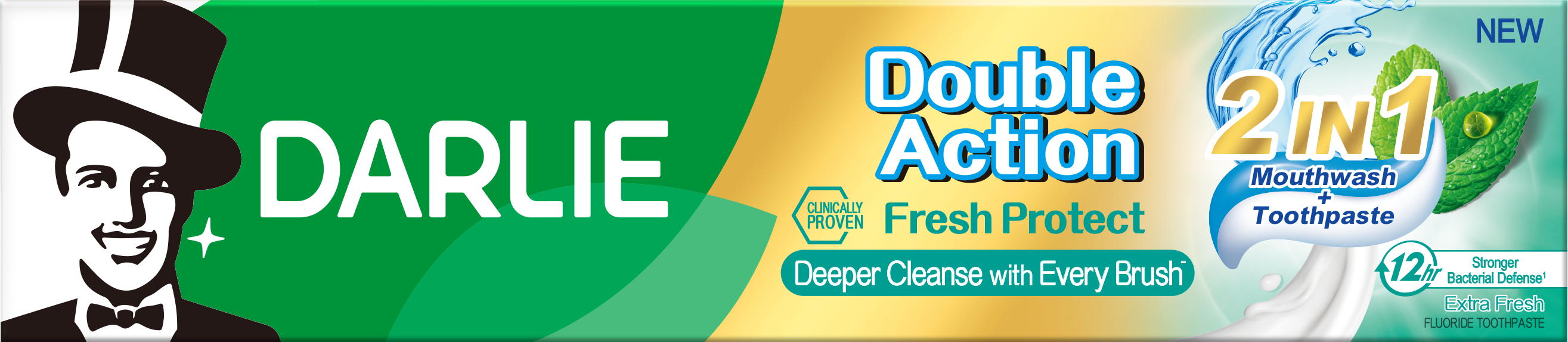
Combine any of the above toothbrushes with the NEW DARLIE Double Action Fresh Protect 2in1 Mouthwash Toothpaste to amplify your results. This unique formula delivers 2X Freshness and a deeper cleanse between gaps through LiquiDual technology, which combines the cleaning power of toothpaste and mouthwash to create a liquid swish during brushing that helps flush out bacteria stuck in micro-gaps. It is clinically proven to combat bad breath and protect gums, provides stronger 12-hour bacterial defence, and is infused with 100% Natural Mint Essence for that signature burst of freshness — making it an ideal partner for your interdental cleaning habit.
Conclusion
In the interdental brush vs floss debate, the honest answer is that both have their place — and the best tool is the one that fits your teeth, your routine, and your lifestyle. Dental floss is the go-to for tight teeth, while interdental brushes often deliver a more thorough clean for wider gaps, braces, or dental restorations. Supporting both with the right toothbrush and toothpaste — such as the DARLIE Graphene Comfort Clean Toothbrush, DARLIE Volcanic Charcoal Toothbrush, DARLIE Charcoal Spiral Graphene Toothbrush, or NEW DARLIE Double Action Fresh Protect 2in1 Mouthwash Toothpaste — can help you reach that hidden 40% more effectively every day.
1. Flossing - American Dental Association - https://www.ada.org/resources/ada-library/oral-health-topics/floss
2. Slot DE, et al. The efficacy of interdental brushes on plaque and parameters of periodontal inflammation: a systematic review - https://pubmed.ncbi.nlm.nih.gov/32954389/
3. Bristle tip is less than 0.01mm.
4. Based on test result on Escherichia coli and Staphylococcus aureus, proven to effectively reduce bacterial growth on bristles.
5. Compared to normal tapered filament.
2. Slot DE, et al. The efficacy of interdental brushes on plaque and parameters of periodontal inflammation: a systematic review - https://pubmed.ncbi.nlm.nih.gov/32954389/
3. Bristle tip is less than 0.01mm.
4. Based on test result on Escherichia coli and Staphylococcus aureus, proven to effectively reduce bacterial growth on bristles.
5. Compared to normal tapered filament.
Recommended Products