Filtered by Oral Health Goal
Introduction
Ever run your tongue over your teeth and felt a fuzzy, sticky coating? That’s dental plaque. While it may seem harmless at first, plaque control is one of the most important daily habits for protecting your oral health1.
This guide explains what plaque is, what causes plaque to form, how plaque vs tartar differs, how to remove plaque safely at home, and which cavity prevention tips can support a healthy mouth over time.
Quick Takeaways
What Is Dental Plaque and How Does It Form?
Dental plaque is a sticky, pale film of bacteria that builds up on teeth and around the gumline1. It forms continuously, even after brushing, because bacteria in the mouth mix with saliva and food particles on tooth surfaces.
When sugars and starches are left behind after eating or drinking, plaque bacteria feed on them and produce acids that can weaken enamel over time3. That is why daily plaque control matters: plaque is not just leftover food, but an active layer of germs that can affect both teeth and gums.
What Causes Plaque?
Several everyday factors help plaque build up:
Why Plaque Keeps Coming Back
Plaque reforms quickly after meals and throughout the day because it is a living biofilm, meaning a layer of germs that sticks to teeth4. Since it comes back so easily, removing it daily is essential.

What Is Dental Plaque and How Does It Form?
Plaque and tartar are related, but they are not the same thing. Plaque is soft, sticky, and can usually be removed with brushing and flossing at home1. Tartar, also called calculus, is plaque that has hardened and mineralised on the teeth, so it needs to be removed during a professional dental cleaning2.
Tartar may begin forming within 24 to 72 hours if plaque is left undisturbed, which is why regular daily cleaning matters.

Quick Comparison Table
| Feature | Plaque | Tartar |
| Texture | Soft and sticky | Hard and rough |
| Colour | Colourless to pale yellow | Yellow to brown |
| Removal method | Brushing and flossing at home | Professional dental cleaning |
| Health impact | Can contribute to cavities, gum irritation, and bad breath | Can make cleaning harder and increase gum problems |
Why Timing Matters
The sooner plaque is removed, the less chance it has to harden into tartar. Staying consistent with your daily oral hygiene routine helps interrupt this process before it becomes more difficult to manage.
Why Plaque Control Matters for Your Oral Health
Plaque control helps lower the risk of cavities, gum irritation, and bad breath. When plaque stays on teeth too long, its acids can weaken enamel, while plaque near the gumline can irritate gum tissue3.
Plaque and Cavities
Plaque bacteria produce acids that can wear down enamel and lead to tooth decay3. One practical way to support cavity prevention is brushing with fluoride toothpaste, because fluoride helps strengthen enamel against acid attacks5.
Plaque and Gum Problems
Plaque that gathers along the gumline can cause redness, swelling, and bleeding, especially if it is not removed well6. Keeping this area clean is an important part of preventing early gum problems.
Plaque and Bad Breath
Bacteria in plaque can also contribute to persistent bad breath7. Brushing well, cleaning the tongue, and cleaning between teeth all support fresher breath as part of a complete routine.

How to Remove Plaque Safely at Home
Soft plaque can be removed at home with regular brushing and flossing. The goal is not to scrub harder, but to clean thoroughly and consistently. Hardened tartar, however, cannot be removed safely at home.
Step 1: Brush Twice a Day for 2 Minutes
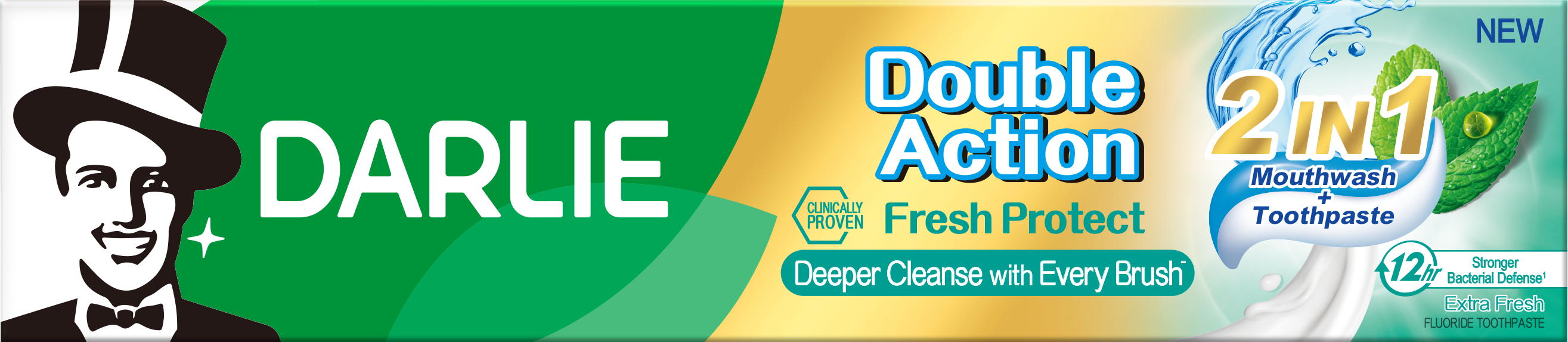
Use a fluoride toothpaste, angle your brush toward the gumline, and make gentle circular motions instead of scrubbing hard. For a simple daily option, DARLIE Double Action Fresh Protect 2in1 Mouthwash Toothpaste combines toothpaste and mouthwash benefits in one tube with LiquiDual technology for a deeper cleanse between gaps. It also supports 2X freshness, stronger 12-hour bacterial defense, 3X plaque removal power, gum protection, bad-breath control, and a signature fresh feel from 100% natural mint essence.
Step 2: Clean Between Teeth Once a Day
Use floss or interdental cleaners to reach areas your toothbrush misses. Curve the floss around each tooth and move it gently below the gumline to help remove plaque from tight spaces8.

Step 3: Clean Your Tongue
Tongue cleaning can help reduce bacteria and support fresher breath7. You can use a tongue scraper or gently brush your tongue as part of your daily oral hygiene routine.

Step 4: Make Your Routine Easier to Stick With
To make plaque control easier to maintain, keep brushing and flossing in the same order every day, pair oral care with existing habits such as after breakfast and before bed, and set reminders if needed.

What Not to Do at Home
Do not try to scrape tartar off with sharp tools. This can hurt your gums or damage tooth surfaces. If you notice hard deposits that do not brush away, see a dentist for a professional cleaning2.

Build a Daily Oral Hygiene Routine That Actually Works
A simple routine is often the easiest one to keep. In the morning, brush with fluoride toothpaste, clean your tongue, and rinse if needed. At night, brush thoroughly, floss once a day, and pay extra attention to the gumline. During the day, rinsing with water after meals and choosing tooth-friendlier snacks can also help reduce plaque buildup.
Cavity Prevention Tips to Support Long-Term Plaque Control

Along with brushing and flossing, a few extra habits can support long-term plaque control:
Consistent daily habits are some of the most practical cavity prevention tips for everyday life.
When to See a Dentist
If plaque seems to return quickly even with regular care, if your gums are often red, swollen, or bleeding, if your teeth feel sensitive, or if you notice persistent bad breath, it is a good idea to see a dentist6. Professional advice is also important if you think tartar has formed and home care is no longer enough.
Conclusion
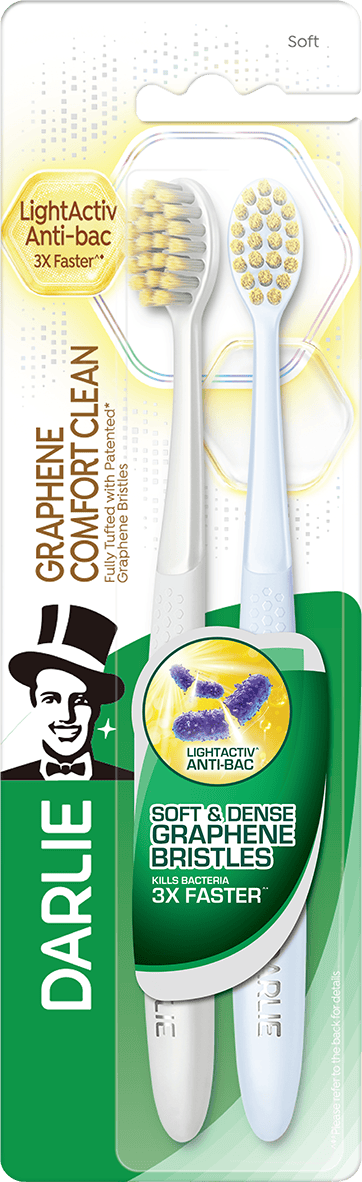
Plaque control comes down to small daily habits that protect your teeth and gums over time. By brushing well, cleaning between teeth, cleaning your tongue, and being mindful of sugary foods, you can manage plaque more effectively. A comfortable tool like the DARLIE Graphene Comfort Clean toothbrush can make everyday brushing easier with LightActiv Graphene Bristles that kill 99% of bacteria 3X faster when exposed to light, along with 3X more ultra-soft, dense bristles for a gentle yet effective clean.
REFERENCES
1. Home Oral Care | American Dental Association - https://www.ada.org/resources/ada-library/oral-health-topics/home-oral-care/
2. Scaling and Root Planing – American Dental Association - https://www.ada.org/sitecore/content/ADA-Organization/ADA/MouthHealthy/home/all-topics-a-z/scaling-and-root-planing
3. The Tooth Decay Process: How to Reverse It and Avoid a Cavity | National Institute of Dental and Craniofacial Research - https://www.nidcr.nih.gov/health-info/tooth-decay/more-info/tooth-decay-process
4. Dental plaque as a biofilm and a microbial community – implications for health and disease - https://pmc.ncbi.nlm.nih.gov/articles/PMC2147593/
5. About Fluoride | CDC - https://www.cdc.gov/oral-health/prevention/about-fluoride.html
6. About Periodontal (Gum) Disease | CDC - https://www.cdc.gov/oral-health/about/gum-periodontal-disease.html
7. Clinical Practice Guidelines on the Diagnosis and Treatment of Halitosis - https://pmc.ncbi.nlm.nih.gov/articles/PMC12914797/
8. Dental Floss/Interdental Cleaners | American Dental Association - https://www.ada.org/resources/ada-library/oral-health-topics/floss
1. Home Oral Care | American Dental Association - https://www.ada.org/resources/ada-library/oral-health-topics/home-oral-care/
2. Scaling and Root Planing – American Dental Association - https://www.ada.org/sitecore/content/ADA-Organization/ADA/MouthHealthy/home/all-topics-a-z/scaling-and-root-planing
3. The Tooth Decay Process: How to Reverse It and Avoid a Cavity | National Institute of Dental and Craniofacial Research - https://www.nidcr.nih.gov/health-info/tooth-decay/more-info/tooth-decay-process
4. Dental plaque as a biofilm and a microbial community – implications for health and disease - https://pmc.ncbi.nlm.nih.gov/articles/PMC2147593/
5. About Fluoride | CDC - https://www.cdc.gov/oral-health/prevention/about-fluoride.html
6. About Periodontal (Gum) Disease | CDC - https://www.cdc.gov/oral-health/about/gum-periodontal-disease.html
7. Clinical Practice Guidelines on the Diagnosis and Treatment of Halitosis - https://pmc.ncbi.nlm.nih.gov/articles/PMC12914797/
8. Dental Floss/Interdental Cleaners | American Dental Association - https://www.ada.org/resources/ada-library/oral-health-topics/floss
Recommended Products