Filtered by Oral Health Goal
Noticing white spots on your teeth can be concerning, but it’s a common issue with several possible causes. Understanding what these spots mean is the first step toward managing them effectively. A consistent oral care routine can help protect your enamel and support a healthier smile.
Do White Spots on Teeth Mean Early Decay?
The short answer: sometimes yes, sometimes no
Seeing white spots on your teeth can be an early warning sign, but it doesn't automatically mean you have a cavity. These marks can be an early sign of enamel demineralisation, which is the first stage of tooth decay1. However, they can also result from other factors like dental fluorosis from excessive fluoride intake during childhood, or natural developmental differences in your tooth enamel2.
Simply put, not every white spot is a cavity. These early marks, often called white spot lesions, are areas where the enamel has lost minerals, causing it to look chalky, dull, or more opaque than the rest of the tooth3.
Why this matters?
The good news is that when early decay white spots are caught in time, they can often be stopped or improved before a cavity forms4. The enamel surface is typically still intact at this stage5. This makes early detection important, because a dentist may be able to manage the area with non-invasive care before it progresses further.

What White Spots on Enamel Actually Are?

A simple explanation of enamel changes
Your tooth enamel is the hard, protective outer layer of your teeth. It is made of tightly packed mineral crystals. When bacteria in your mouth feed on sugars, they produce acids that can dissolve these minerals, a process known as demineralisation4.
When minerals are lost from the enamel, its structure changes and it no longer reflects light in the same way. This is why a chalky or dull white spot becomes visible6. These demineralisation white spots are among the earliest signs that enamel has started to weaken.
White spots vs. cavities
It's important to understand the difference between white spot lesions and full cavities. An early white spot is a warning sign, while a cavity means the damage has progressed and the enamel has broken down.
| White Spots | Cavities |
| Enamel is still mostly intact | Enamel has broken down |
| Often reversible or improvable | Needs dental treatment |
| Can look chalky or dull | May look dark, soft, or have a hole |
Common Causes of White Spots on Teeth
Early decay from plaque and sugar frequency
A common cause of new white spots on teeth in adults is early decay. This happens when bacteria in plaque produce acids that pull minerals from your enamel, especially when sugary or acidic foods and drinks are consumed often7.
White spots after braces
It’s common to notice white spot lesions after orthodontic treatment. Brackets and wires create hard-to-clean areas where plaque can build up easily, and this can lead to demineralisation around the brackets if oral hygiene is not maintained carefully8.
Other non-decay causes

How to Tell If White Spots Are More Likely Early Decay?

Signs that point to active demineralisation
While you cannot be certain without a dental exam, some signs suggest a white spot may be due to active decay:
Signs that may suggest a non-decay cause
Some features may point to a non-decay cause instead:
Helpful note
These are only general signs. The best way to know what is causing white spots on enamel is to have them checked by a dentist, who can assess the cause and suggest the most appropriate next step10.
Can White Spots on Teeth Be Reversed?
What remineralisation means
In many cases, early demineralisation white spots can be improved through remineralisation. Saliva helps return minerals such as calcium and phosphate to the tooth surface, while fluoride supports this repair process and helps strengthen weakened enamel before a cavity forms4.

What improvement can look like
When remineralisation is successful, white spot lesions may become less chalky and blend in better with the surrounding tooth. Some white spots on teeth may not disappear completely, but strengthening the enamel can still help lower the chance of future decay.

What helps at home
A good home care routine includes brushing thoroughly with fluoride toothpaste, cleaning between your teeth, and managing sugar intake. If you want whitening support alongside cavity protection, DARLIE All Shiny White Starshine Toothpaste - Sakura combines a gel format with imported whitening star flakes for a dreamy brushing feel, while its 10 billions whitening star particles help brighten teeth, remove stains, and reduce future stain build-up. It also contains natural floral essences to freshen breath and fluoride to help prevent cavities11.

How to Remove White Spots Teeth: Treatment Options?
First-line care for early decay white spots
For early decay white spots, the first goal is to stop demineralisation and support remineralisation. This usually means improving brushing, flossing, fluoride exposure, and diet habits. A dentist may also suggest professional fluoride application where appropriate4.
When cosmetic treatment may help
If a white spot is stable but still bothers you cosmetically, professional treatment may help. Whitening may make colour differences less obvious, while resin infiltration, microabrasion, bonding, or veneers may be considered depending on the cause and depth of the spot6.

Treatment match guide
| Cause | Best first step | Possible cosmetic next step |
| Early decay / demineralisation | Fluoride, hygiene, diet changes | Resin infiltration |
| Post-braces white spots | Remineralising care | Resin infiltration or microabrasion |
| Fluorosis | Monitor or whitening | Microabrasion / resin infiltration |
| Developmental enamel differences | Protect and monitor | Bonding or veneers |
Preventing More White Spots on Teeth

Daily habits that protect enamel
The best way to deal with white spots on teeth is to prevent them from forming in the first place. Strong daily habits are key to protecting enamel.
If surface stains are also a concern, DARLIE All Shiny White Magnificent Toothpaste uses ActiveOxygen technology that releases trillions of whitening agents when it contacts water, creating a warming sensation as it works on intrinsic and extrinsic stains. Its imported non-aqueous formulation helps stabilise the active oxygen, and its 12x stain dissolvability power is designed to lift deeper stains for a brighter smile, with claims of clinically proven whitening in 3 days and 15 years stain reversal in 2 weeks with continued use12.
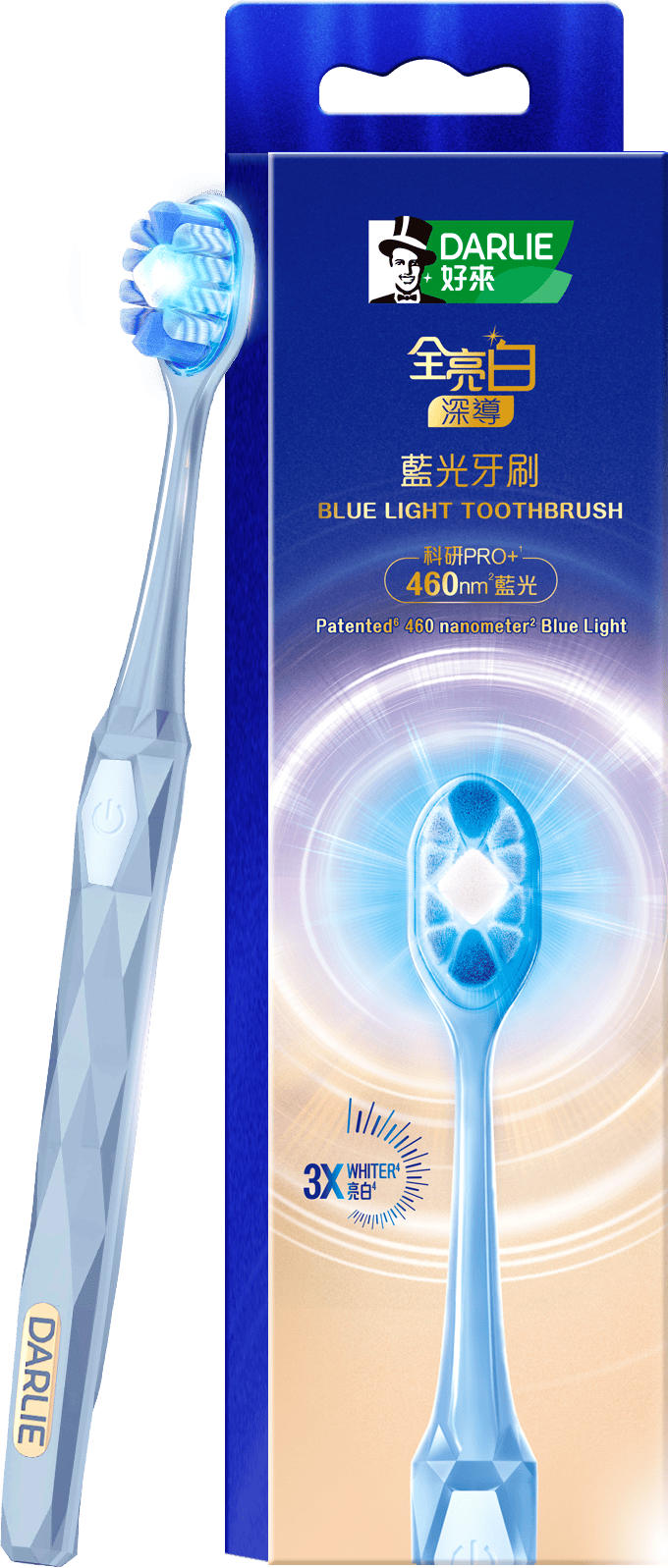
To pair with that routine, DARLIE All Shiny White Magnificent Blue Light Toothbrush uses 460nm medical-grade blue light to work together with DARLIE All Shiny White Magnificent Toothpaste, helping accelerate stain breakdown, loosen deeply set stains, and support faster whitening at home. It is positioned as the first blue light whitening toothbrush in Singapore and brings a professional-style whitening experience into your daily brushing routine.
If you wear braces or retainers
Having orthodontic appliances requires extra diligence.
When to See a Dentist
Book a routine check-up if
Seek care sooner if

1. Tooth Decay | National Institute of Dental and Craniofacial Research (NIDCR) - https://www.nidcr.nih.gov/health-info/tooth-decay
2. About Dental Fluorosis | CDC - https://www.cdc.gov/oral-health/about/about-dental-fluorosis.html
3. Systematic Review and Meta-Analysis of Remineralizing Agents: Outcomes on White Spot Lesions - PMC - https://pmc.ncbi.nlm.nih.gov/articles/PMC11762951/
4. The Tooth Decay Process: How to Reverse It and Avoid a Cavity | National Institute of Dental and Craniofacial Research - https://www.nidcr.nih.gov/health-info/tooth-decay/more-info/tooth-decay-process
5. Dental Caries and Its Management - PMC - https://pmc.ncbi.nlm.nih.gov/articles/PMC9831703/
6. White spot lesions: diagnosis and treatment – a systematic review - https://pmc.ncbi.nlm.nih.gov/articles/PMC10775501/
7. Cavities (Tooth Decay): Symptoms, Causes & Treatment | Cleveland Clinic - https://my.clevelandclinic.org/health/diseases/10946-cavities
8. White spot lesions in fixed orthodontic treatment: Etiology, pathophysiology, diagnosis, treatment, and future research perspectives - https://pmc.ncbi.nlm.nih.gov/articles/PMC11114457/
9. Enamel Hypoplasia: Causes & Treatment | Cleveland Clinic - https://my.clevelandclinic.org/health/diseases/enamel-hypoplasia
10. Fluoridation FAQs | American Dental Association - https://www.ada.org/resources/community-initiatives/fluoride-in-water/fluoridation-faqs
11. Total polyphosphate (Tetrasodium Pyrophosphate,Disodium Pyrophosphate) and Hydrated Silica
12. Clinically proven, effectively enhance teeth whitening shade with continuous used for 3 days. Effects may vary across individuals
2. About Dental Fluorosis | CDC - https://www.cdc.gov/oral-health/about/about-dental-fluorosis.html
3. Systematic Review and Meta-Analysis of Remineralizing Agents: Outcomes on White Spot Lesions - PMC - https://pmc.ncbi.nlm.nih.gov/articles/PMC11762951/
4. The Tooth Decay Process: How to Reverse It and Avoid a Cavity | National Institute of Dental and Craniofacial Research - https://www.nidcr.nih.gov/health-info/tooth-decay/more-info/tooth-decay-process
5. Dental Caries and Its Management - PMC - https://pmc.ncbi.nlm.nih.gov/articles/PMC9831703/
6. White spot lesions: diagnosis and treatment – a systematic review - https://pmc.ncbi.nlm.nih.gov/articles/PMC10775501/
7. Cavities (Tooth Decay): Symptoms, Causes & Treatment | Cleveland Clinic - https://my.clevelandclinic.org/health/diseases/10946-cavities
8. White spot lesions in fixed orthodontic treatment: Etiology, pathophysiology, diagnosis, treatment, and future research perspectives - https://pmc.ncbi.nlm.nih.gov/articles/PMC11114457/
9. Enamel Hypoplasia: Causes & Treatment | Cleveland Clinic - https://my.clevelandclinic.org/health/diseases/enamel-hypoplasia
10. Fluoridation FAQs | American Dental Association - https://www.ada.org/resources/community-initiatives/fluoride-in-water/fluoridation-faqs
11. Total polyphosphate (Tetrasodium Pyrophosphate,Disodium Pyrophosphate) and Hydrated Silica
12. Clinically proven, effectively enhance teeth whitening shade with continuous used for 3 days. Effects may vary across individuals
Frequently Asked Questions
A: No. While they can be an early sign of decay known as a white spot lesion, they may also result from fluorosis or developmental differences in enamel.
A: Early demineralisation white spots may improve with good oral hygiene, a lower-sugar diet, and regular use of fluoride toothpaste. More established spots or those caused by non-decay factors may need professional treatment to improve their appearance.
A: The best option depends on the cause. Early decay white spots are usually managed first with remineralisation and fluoride, while cosmetic concerns may be addressed with whitening, resin infiltration, microabrasion, bonding, or veneers.
A: Plaque can build up around orthodontic brackets and wires, making those areas harder to clean. Over time, this can lead to demineralisation of the enamel that becomes visible as white spots once braces are removed8.
Recommended Products